
The Top Digital Marketing Tools for PT Clinics (2026): A Simple, Honest Toolkit
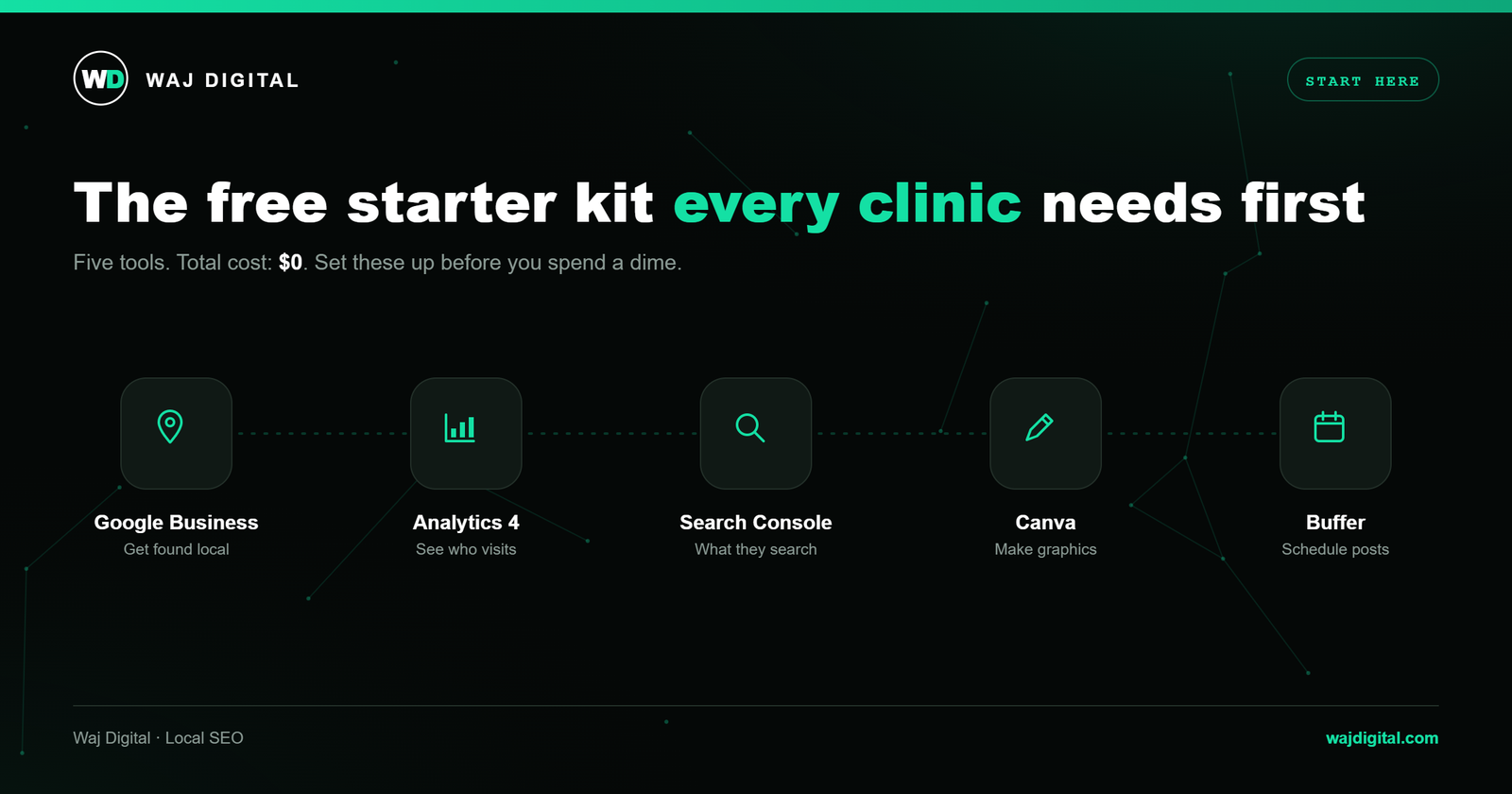
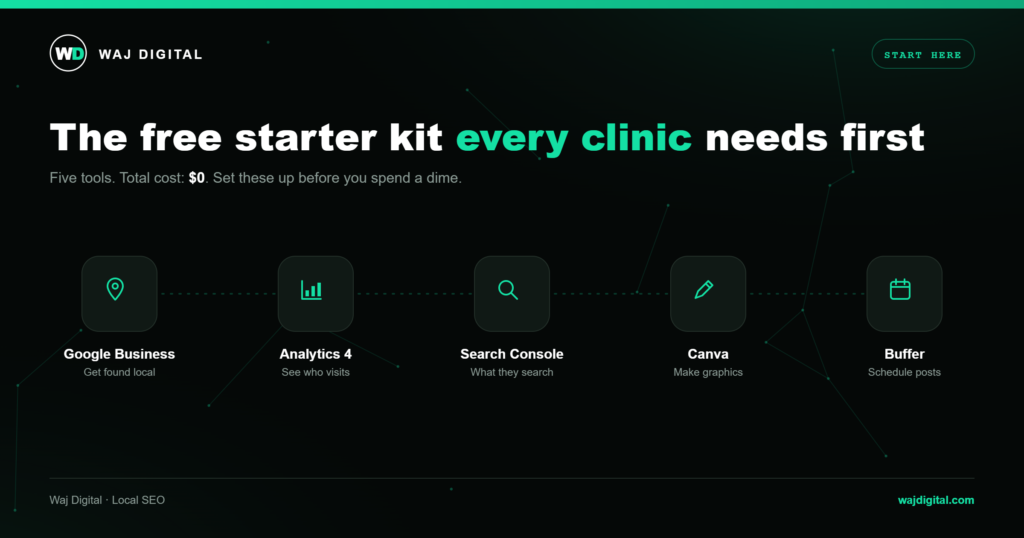
PT Marketing Guide The Digital Marketing Tools That Actually Grow a PT Clinic The tools worth paying for, sorted by clinic size and budget — with real 2026 prices, the ones to skip, and the HIPAA trap most guides miss. Get a Free Marketing Audit →Read the Full Guide ↓ CategoryPhysical Therapy Marketing Read Time10 Minutes PublishedAugust 7, 2026 Written ByWajahat Badar Minhas On This Page What marketing tools really mean Start here: the free tools The HIPAA rule most lists ignore Tools by job Build your stack by clinic size What to skip (for now) How to tell if a tool is working Frequently Asked Questions What to do next Share This Article Xinf🔗 Most “best tools” lists hand you 18 apps and wish you luck. That’s not help — it’s a shopping list you didn’t ask for. A small PT clinic doesn’t need 18 tools. It needs about five. This guide shows which ones, sorted by clinic size and budget, with real 2026 prices — plus the tools to skip and the one HIPAA mistake that can cost you a fine. 01 · Basics What “marketing tools” really mean for a PT clinic A marketing tool is just software that helps new patients find you and book a visit. That’s it. The good ones do one of five jobs: help people find you on Google, help you look good online, collect reviews, stay in touch with people who aren’t ready yet, and track what’s working. You don’t need a tool for every job on day one — you build up over time. 02 · Free stack Start here: the free tools every clinic needs first Before you pay for anything, set these up. They’re free, and they beat most paid tools. Google Business Profile is the map box people see when they search “physical therapist near me.” Finish every field before you build anything else. Google Analytics and Search Console show who visits and find the exact phrases patients search for. Canva’s free plan lets you make simple graphics without hiring a designer, and Buffer schedules a week of social posts in one sitting. That’s your whole starter kit. Total cost: $0. Set these up before you spend a dime. 03 · HIPAA The HIPAA rule most tools lists ignore Your clinic handles protected health information, and a lot of popular tools aren’t safe for it. Mailchimp, for example, won’t sign a Business Associate Agreement (a BAA) — so it’s fine for general tips and offers, but not for anything tied to a patient’s care. The rule is simple. General marketing (newsletters, exercise tips, clinic news) is fine on most tools. Anything about a patient (reminders, treatment updates, their condition) needs a signed BAA. Ask any vendor in writing: “Will you sign a BAA?” No BAA, no patient data. 04 · By job Tools by job: pick what you actually need Get found (local SEO). On a budget, Ubersuggest runs about $29/mo. Semrush (~$140/mo) is powerful but overkill unless someone uses it weekly. Look good. Canva and Buffer cover about 90% of what a clinic needs for social media. You don’t need a separate tool per platform. Collect reviews. Start with the free Google review link — text it to patients after a good visit. Podium or Birdeye automate it later (BAA required, since texts name the patient). Email. General tips are fine on a normal tool; patient-specific email goes through your EMR or a BAA tool. Paid ads. Start Google Ads small ($10–20/day). Meta Ads are better for awareness. If you run ads, add CallRail (~$50/mo) so you know which ad made the phone ring. 05 · By size Build your stack by clinic size Free tools never leave the list. You add on top — you don’t replace. Clinic size Monthly spend Tools to run Solo / brand-new $0 Google Business Profile, Analytics, Search Console, Canva free, Buffer free Small clinic (2–4 staff) ~$20–70/mo Everything above, plus Canva Pro, Buffer Essentials, and Ubersuggest for SEO Growing / multi-location $200+/mo Everything above, plus a review tool (BAA required), Google Ads, CallRail, and maybe Semrush 06 · Skip What to skip (at least for now) Honest advice you won’t get from a list trying to sell you things: don’t buy two SEO tools (Semrush, Ahrefs and Surfer overlap — pick one or none). Don’t pay for schedulers you won’t fill. Skip the all-in-one “marketing platform” on day one. And don’t run ads before your reviews and Google Business Profile are solid — you’d be paying to send people to a thin profile. 07 · Measure How to tell if a tool is working Buying a tool feels like progress. Results are the real test. Check four things monthly, all free to see: calls and bookings, new reviews, Google Business Profile views, and website visits from search. If a paid tool hasn’t moved one of these in two or three months, cancel it. The goal is patients, not a full toolbox. 08 · FAQ Frequently Asked Questions What is the single best marketing tool for a physical therapy clinic? Google Business Profile, and it’s free. For a local clinic, showing up in the map results with good reviews beats almost everything else. How much should a small PT clinic spend on marketing tools? You can start at $0 with the free stack. A small clinic ready to grow usually spends $20 to $70 a month. Spend more only when you’re running ads or juggling multiple locations. Is Mailchimp safe for a physical therapy clinic? Only for general, non-health emails. Mailchimp won’t sign a BAA, so don’t use it for anything tied to a patient’s care. Use your EMR or a HIPAA-safe tool that signs a BAA. Do I need a paid SEO tool like Semrush? Probably not at first. Free tools like Search Console go a long way. Get Ubersuggest when SEO becomes a real focus, and Semrush only if someone will use it weekly. How many marketing
The Top Digital Marketing Tools for PT Clinics (2026): A Simple, Honest Toolkit Read More »