Get In Touch
×
Every number here comes from a Pinterest Ads Manager account we run. Each one is backed by a dashboard you can go and look at.
No survey data. No industry averages. Nothing we cannot show you.
Across the four accounts we run and publish, a Pinterest click has cost between £0.07 and $0.24. A thousand views has cost between £0.76 and $7.06. Return on ad spend ran from 3.2x to 77.8x.
That spread is the real finding. Same platform, run the same way, and a nine times difference in what views cost.
Your market sets those numbers. So does your order value and your funnel. Pinterest does not.
One average CPM figure tells you almost nothing about your own account. Most benchmark posts lead with exactly that.
Below is every account we can show, with its spend and window attached. Find the row that looks like your business instead of averaging ours.
Currencies appear as they do in the account. We have not converted them. The exchange rate on the day would add a number nobody measured.
| Account / vertical | Market | Model | CPC | CPM | ROAS | Spend → result in the window shown | Proof |
|---|---|---|---|---|---|---|---|
| Premium DTC ecommerce | US | ~$2,030 AOV | $0.24 | $2.33 (derived) | 77.8x | $54.99 → 23,640 impressions, 4 checkouts | dashboard |
| Mattress DTC | US | High-ticket sleep | not published | $7.06 | 49.2x | 60 days: $1,136.28 → $55,869.99 order value | dashboard |
| Mattress DTC (blended account) | US | High-ticket sleep | not published | not published | 33.7x | Later 60 days: ~$1.7k → ~$56.5k, 24 checkouts | dashboard |
| Aesthetic clinic | UK | Lead generation | £0.10 (best £0.07) | £0.76 | lead gen, no ROAS | £554.56 → 732,842 impressions, 5,290 outbound clicks | dashboard |
| Aesthetic clinic (60-day view) | UK | Lead generation | £0.11 | not published | lead gen, no ROAS | £438.10 → 559,800 impressions, 4.1k clicks | dashboard |
| Aesthetic clinic (scaling window) | UK | Lead generation | £0.09 | not published | lead gen, no ROAS | £255.56 → 332,900 impressions, 2.98k clicks | dashboard |
| Home decor / tiles | US | Mid-ticket home | not published | $2.29 | 3.2x | 7 days: $71.80 → 31,410 impressions, 2 checkouts worth $229.48 | dashboard |
CPC and CPM say "not published" where the dashboard did not show that number. We would rather leave a gap than work one out. The only derived figure here is the $2.33 CPM, from the spend and views on screen.
Client names withheld under NDA. We will walk you through the accounts on a call.
A UK beauty audience cost £0.76 per thousand views. A US high-ticket sleep audience cost $7.06 for the same thousand.
Pinterest did not change its prices. The number of advertisers chasing that person did.
77.8x and 3.2x came from the same channel, run the same way. One store sells at about $2,030 an order. The other sells at about $115.
A big order value does not make the ads better. It makes the same click worth more.
A seven day view catches whatever happened that week. A 90 day view smooths it out.
The mattress account shows 49.2x on one format in one window. It shows 33.7x across the whole account in another. Both are true. Neither is the real number on its own.
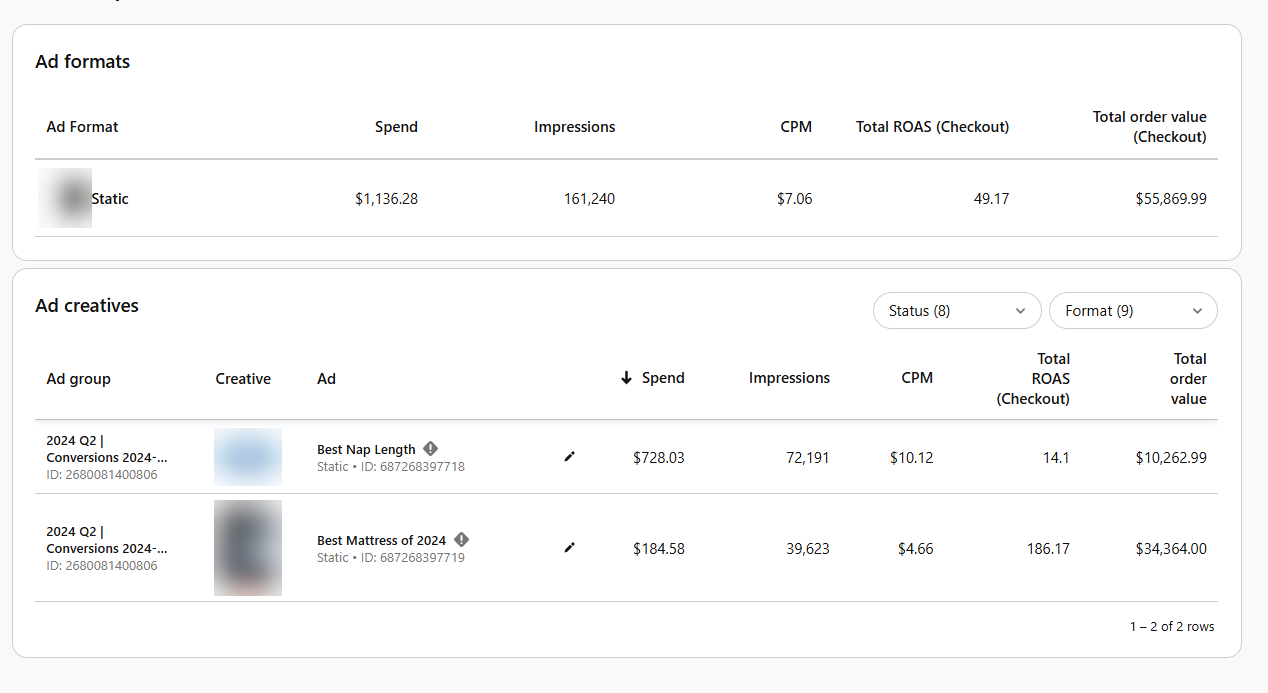
Mattress DTC, 60-day window: $1,136.28 spend → $55,869.99 order value.
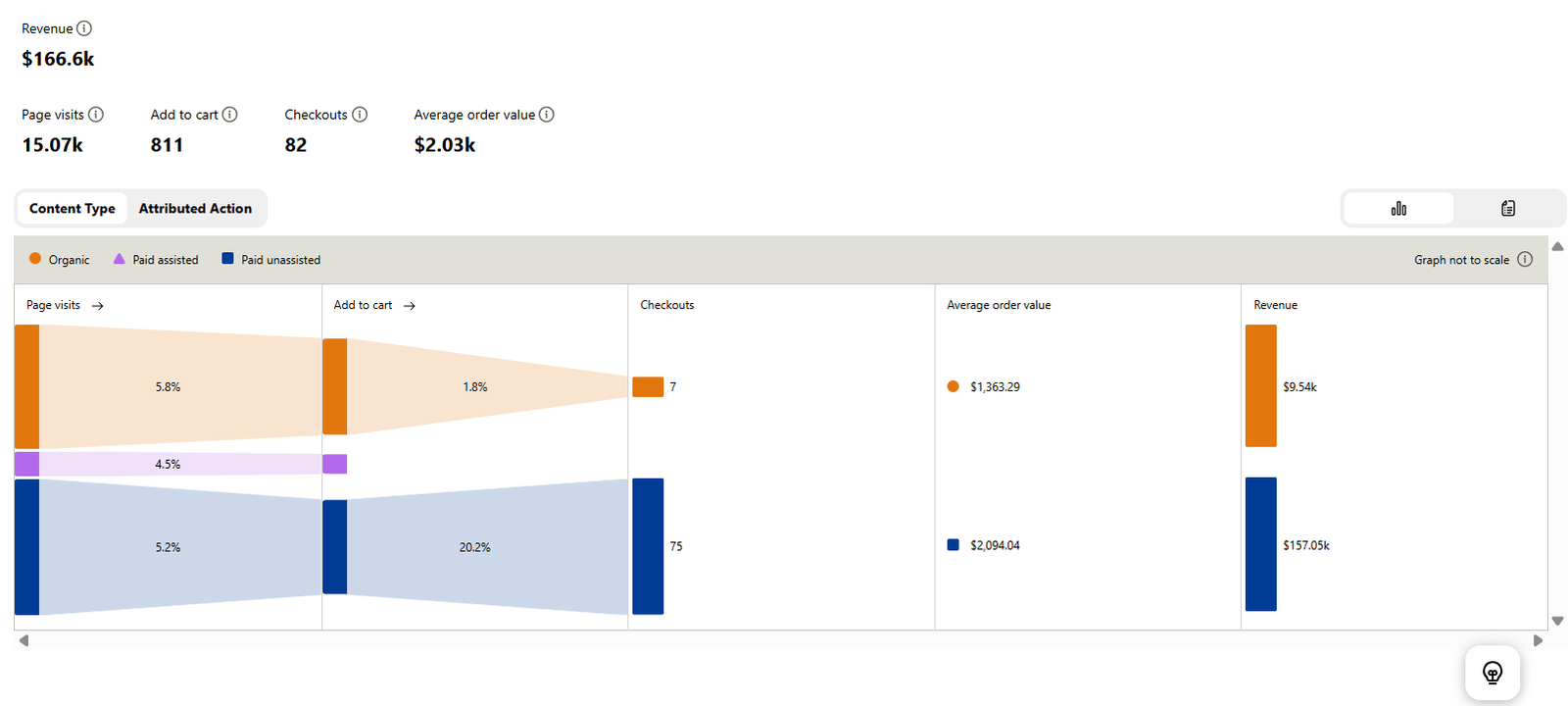
Premium DTC: $166.6k attributed across 82 checkouts at roughly $2,030 each.
The other dashboards sit on their own case study pages, linked from every row above.
Find the row whose market and order value look like yours. Then compare one number at a time, using the same length of window.
Do not compare your seven day CPM to someone else's 90 day ROAS. That is how people talk themselves into and out of channels for no reason.
1. Match the market first. A UK audience and a US audience are different auctions. Comparing across them tells you about exchange rates, not performance.
2. Then match the order value. ROAS is just arithmetic. If you sell at $80 and the row sells at $2,030, no amount of work closes that gap.
It does not need to. Your break-even ROAS is different too.
3. Then check the window. Seven days is a snapshot. Sixty to 90 days is a trend. Use the same length on both sides or the comparison means nothing.
4. Check what the number counts. Pinterest and Google Analytics disagree all the time. Pinterest reports inside a window you can set. GA4 credits the last click.
We explain why in Pinterest for ecommerce.
Publishing real numbers means publishing their limits too. Here is what this page is not.
There is no single good number. In the accounts Waj Digital runs, a click has cost between £0.07 and $0.24. It depends on the market and the audience.
The UK aesthetic clinic account ran at a blended £0.10 CPC, with the best ad groups at £0.07. A US premium DTC account ran at $0.24. A CPC only means something next to your order value.
A $0.24 click against a $2,030 order is cheap. A $0.10 click against an $18 product may not be.
Across the four accounts Waj Digital publishes, CPM has run from £0.76 to $7.06 per thousand views. That is a nine times difference on the same platform. The low end was a UK beauty audience.
The high end was a US high-ticket sleep audience. Because the spread is that wide, one average Pinterest CPM is not a useful planning number. Match your own market and category to the closest row instead.
In the accounts Waj Digital runs, return on ad spend has gone from 3.2x to 77.8x. The 3.2x was a seven day window for a home decor store.
The 77.8x was an account view for a premium DTC brand. A mattress DTC brand hit 49.2x on its best format over 60 days. The main driver is order value, not the ad platform.
Two stores can run the same campaigns and report very different ROAS. One sells at $115. The other sells at $2,030.
No, and we would not claim so. This is four accounts in two countries, in a narrow set of categories: high-ticket DTC, home decor and UK aesthetics. All of them had active management and tracking checked before launch.
It is evidence, not a sample. Waj Digital publishes it because almost nobody in this market publishes their own account data at all.
Because the dashboard did not show that number. Waj Digital leaves the cell empty rather than working out something that looks right. The only derived figure on the page is a $2.33 CPM.
It comes from the spend and views on screen, and it is labelled as derived.
Most stores can read a real signal from $30 to $100 a day. The home decor account in the table spent $71.80 over seven days and returned $229.48 in order value.
That is enough to tell you whether the channel responds. Ad spend is separate from management fees. With Waj Digital you pay it direct to Pinterest on your own card.
Benchmarks last checked September 2026. New accounts join the table as their case studies go live.
Free · 48 hours · no call
Pinterest is a search engine. Your buyers type words into it every day. Some brands show up. Most do not.
If the gap is small, we will say so. You do not need us then.
Two boxes. No call booked.
Free. Five a week. No card, no call.
A free audit puts your own CPC, CPM and tracking against this table. You do not have to work with us.
If Pinterest is wrong for your category, that is what the audit will say.