Get In Touch
×
Eighty-two checkouts at a ~$2,030 average order value — driven by one funnel where organic pins warm the audience and conversion campaigns close it. The dashboards below show exactly how the revenue splits.
The client sells premium DTC products with an average order value around $2,000 — the kind of purchase people research, save, and come back to. That behavior is exactly what Pinterest is built on, but like most brands they’d only ever dabbled: some pins, no strategy, no tracking, no paid support.
The goal wasn’t a viral spike. It was a system — organic presence that compounds, paid campaigns that convert the demand organic warms up, and attribution clean enough to prove every dollar.
1. Tracking before anything. Pinterest tag with full-funnel events — page visits, add-to-carts, checkouts — so the conversion-insights view could attribute revenue by content type: organic, paid-assisted, and paid.
2. Organic foundation. Keyword-structured boards and consistent pinning built the warm layer: organic content drove thousands of visits and assisted a further 4.5% of all Pinterest traffic that later converted through paid.
3. Conversion campaigns on the bottom of the funnel. Paid budget went where intent was highest. The result shows in one number: paid traffic converted add-to-carts to checkouts at 20.2% — eleven times the organic rate — because ads re-engaged people who already knew the product.
4. Efficiency held at the click level. In the account window shown below, clicks cost $0.24 — high-intent traffic at a price that makes a $2,000 AOV funnel almost unfair.
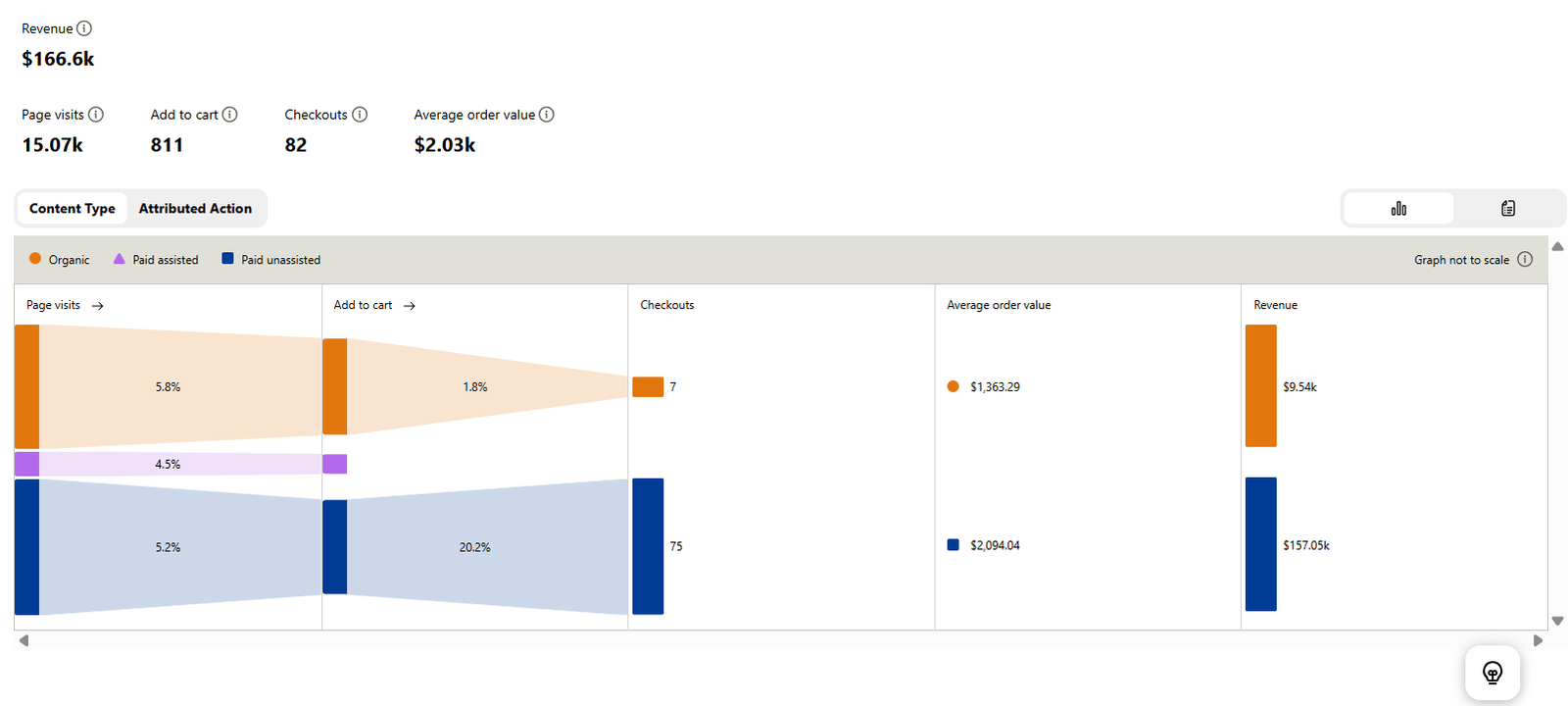
Conversion insights: $166.6k attributed revenue — 15,070 page visits → 811 add-to-carts → 82 checkouts at ~$2,030 AOV, split by content type.
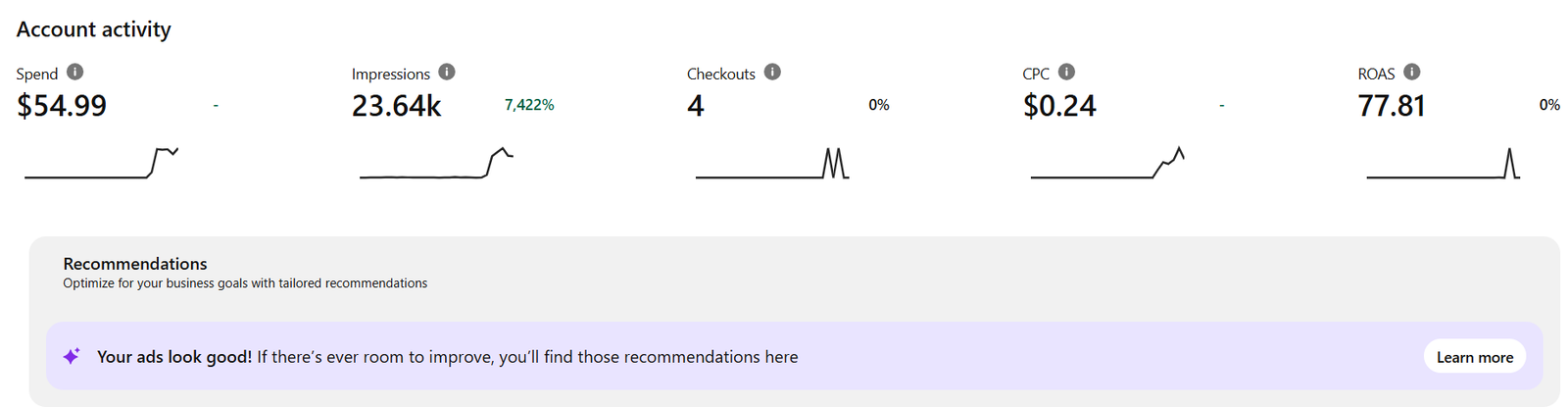
Account activity view: $54.99 spend → 23.6k impressions, 4 checkouts at a $0.24 CPC — a 77.8x ROAS in the window shown.
Client name withheld under NDA — account walkthrough available on request during a call.
The conversion-insights breakdown is the most honest picture of how a mature Pinterest funnel behaves — and why running only one half leaves money on the table:
| Content type | Checkouts | Revenue | Avg order value |
|---|---|---|---|
| Paid (unassisted) | 75 | $157,050 | $2,094 |
| Organic | 7 | $9,540 | $1,363 |
| Paid-assisted | a further 4.5% of converting traffic first touched organic content | — | |
Paid closes; organic feeds and assists — and notably, paid buyers spent more per order. This is the working version of what we tell every client: Pinterest SEO and Pinterest Ads aren’t competing line items, they’re one system.
At a ~$2,000 order value, $0.24 clicks change the math entirely — a handful of checkouts pays for months of traffic. We picked the channel where that arbitrage existed.
Paid budget concentrated on high-intent audiences. The 20.2% cart-to-checkout rate on paid — versus 1.8% organic — is what re-engagement looks like when tracking is clean.
Organic’s $9.5k direct revenue understates it: warming audiences and assisting 4.5% of converting traffic is the part most paid-only agencies never build.
Free · 48 hours · no call
Pinterest is a search engine. Your buyers type words into it every day. Some brands show up. Most do not.
If the gap is small, we will say so. You do not need us then.
Two boxes. No call booked.
Free. Five a week. No card, no call.
This is the full Pinterest marketing agency playbook — organic growth feeding ads management. See how the same system produced 49x ROAS for a mattress DTC brand, or start with a free audit of your own account.
Working out budget? See packages & pricing — from $500/mo, month-to-month, no contracts.